

A clear, practical boiler repressurising guide from your local Gas Safe registered heating engineers.
If your boiler has locked out, your radiators are not heating properly, or you have just noticed the needle on your pressure gauge sitting somewhere it should not be, the chances are you are dealing with a boiler pressure problem. The good news is that this is one of the most common heating issues homeowners face, and in many cases it is something you can safely sort out yourself in a few minutes.
In this guide we will walk you through exactly what boiler pressure should be, how to check it correctly, how to repressurise your system step by step, and importantly, when a pressure problem is a sign of something more serious that needs a Gas Safe registered engineer rather than a DIY fix.
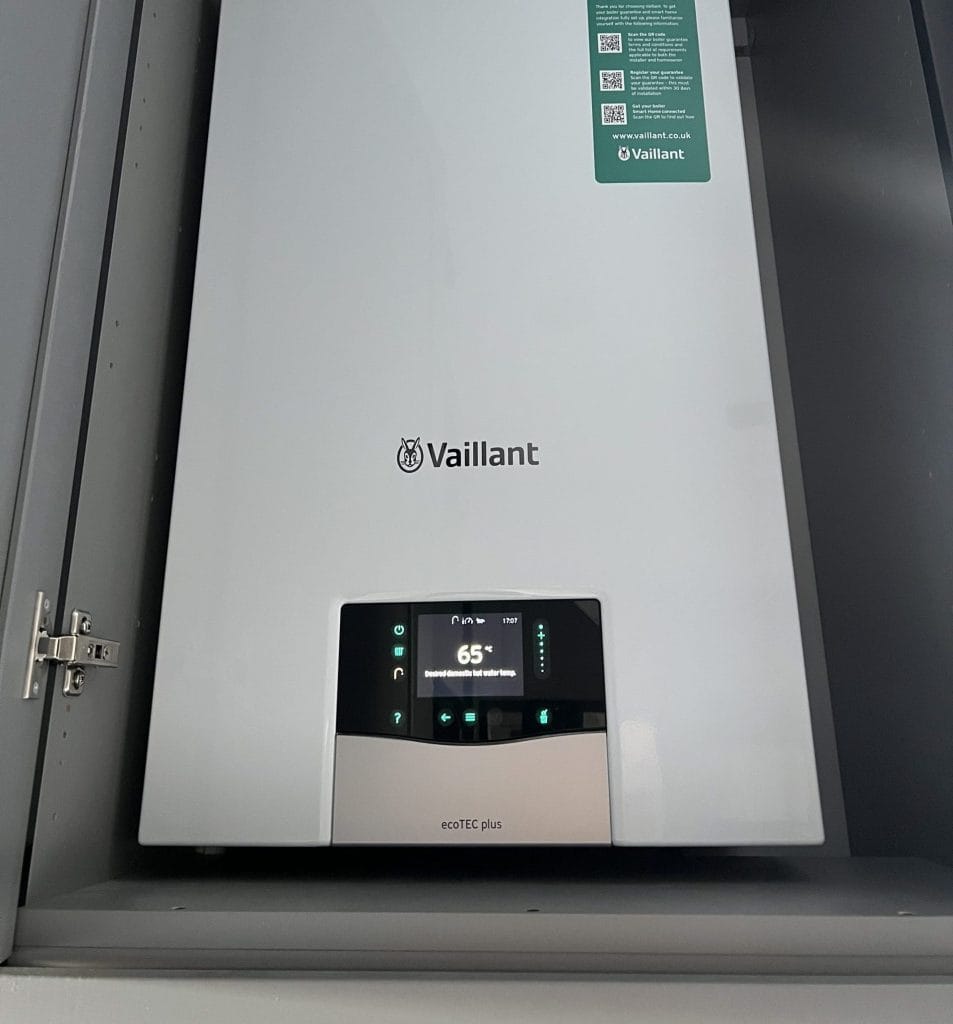
What Is the Correct Boiler Pressure and How Do You Check It?
Boiler pressure is simply the balance of water and air within your sealed central heating system, measured in bar. Getting this right matters because too little pressure means your boiler cannot circulate water effectively, while too much pressure puts unnecessary strain on the system and its components.
When your heating is off and the system is cold, normal pressure should read between 1.0 and 1.5 bar. Most manufacturers recommend an optimal resting pressure of around 1.3 bar, though it is always worth checking your specific boiler manual as this can vary slightly between brands such as Worcester Bosch, Vaillant, Baxi and Ideal.
When your heating is on and the water has warmed up, pressure will naturally rise a little as the water expands. A healthy system typically shows a rise of around 0.3 to 0.7 bar, settling somewhere between 1.5 and 2.0 bar while running.
To check your pressure correctly:
Quick tip
Always check your boiler pressure when the heating is switched off and the system is cold. This gives you the most accurate reading and helps you avoid overfilling the system.
- Locate the pressure gauge, usually found on the front panel of the boiler or just beneath the control panel cover
- Check the reading when the system is cold for the most accurate baseline
- Look for the green zone marked on the gauge, this is your safe operating range
- Note whether the needle sits in either red zone, which indicates pressure that is too low or too high
If your gauge consistently sits within the green zone, your system is operating normally and no action is needed.
How to Repressurise Your Boiler: Step by Step
If your pressure gauge is reading below 1.0 bar, your boiler will need topping up using the filling loop. This is a task most homeowners can carry out safely by following these steps:
Before you start
Make sure the boiler is switched off and has cooled completely before using the filling loop. Open the valve slowly and keep watching the gauge so you can stop as soon as it reaches the recommended 1.0 to 1.5 bar range.
Step 1: Turn off your boiler and allow it to cool Never attempt to repressurise a hot boiler. Switch it off and wait until the system has cooled down completely.
Step 2: Locate your filling loop This is usually a braided silver hose found underneath or beside the boiler, with a valve at each end. Some boilers use a single keyed valve instead. If you cannot find yours, check your boiler manual, the location varies by make and model.
Step 3: Make sure both ends of the filling loop are properly connected If the loop is detachable, both ends need to be securely attached before you begin.
Step 4: Slowly open the valve or valves You should hear water entering the system and see the needle on the pressure gauge begin to rise. Open the valve gradually rather than all at once to keep control of the process.
Step 5: Watch the gauge closely Stop filling once the needle reaches between 1.0 and 1.5 bar. It is easy to overshoot, so go slowly, particularly as you approach the target range.
Step 6: Close the valve or valves Close them firmly, one at a time if you have two, to stop water flowing into the system.
Step 7: Remove the filling loop if detachable If your boiler uses a removable filling loop, disconnect it now and store it somewhere safe for next time. Keep a towel handy in case of any drips.
Step 8: Switch your boiler back on Turn the power back on and press the reset button if required. Most boilers will resume normal operation within a few minutes.
Step 9: Monitor the pressure over the next few hours Check the gauge again later in the day. If the pressure has held steady, the job is done. If it has dropped again, this points to a separate underlying issue.
Boiler Pressure Too High: What Does It Mean and Is It Dangerous?
High boiler pressure is generally less urgent than low pressure but should still not be ignored. If your gauge is reading above 2.5 bar, this usually means the system has been overfilled, either from a previous top-up or a fault with the filling loop or expansion vessel.
Most modern boilers are designed to handle this safely. A pressure relief valve releases excess water if pressure climbs too high, preventing any danger to your home. However, persistent high pressure, particularly readings consistently above 3.0 bar, suggests a fault that should be looked at by a Gas Safe registered engineer rather than something to keep resetting yourself.
To bring high pressure back down:
- Locate a radiator and attach a bleed key to the bleed valve
- Hold a cloth or small container underneath to catch any drips
- Slowly open the valve until you hear a hiss and water begins to dribble out
- Close the valve once a small amount of water has been released
- Check the pressure gauge and repeat on another radiator if needed until pressure returns to the green zone
If your pressure keeps climbing back up shortly after bleeding a radiator, this points to a fault with the filling loop not closing fully, or a failing expansion vessel, both of which need professional attention.
Boiler Pressure Keeps Dropping Even After You Top It Up
This is one of the most frustrating situations homeowners face, and understandably so. If you have followed the steps above, topped up your pressure correctly, and it drops again within hours or days, this is not something to keep correcting on repeat. A boiler that consistently loses pressure is telling you something, and that something is almost always water escaping the system somewhere it should not be.
Common causes of recurring pressure loss include:
- A leak somewhere in the pipework, radiators or valves
- A failing pressure relief valve that is releasing water even when it should not be
- A faulty or partially open filling loop allowing water to seep through
- A failing expansion vessel that can no longer regulate pressure correctly
- Recently bled radiators, which naturally lower pressure slightly as air is released
If you have recently bled a radiator and pressure dropped as a result, this is normal and a single top-up should resolve it. If pressure keeps dropping without an obvious explanation, it is time to call a Gas Safe registered engineer rather than continuing to top up the system repeatedly. Repeated topping up without identifying the cause can mask a more serious fault and, in some cases, make the eventual repair more complicated.
Important warning
If your boiler pressure keeps dropping after you top it up, do not continue repressurising it repeatedly. Ongoing pressure loss can indicate a leak or a faulty component that needs to be inspected by a Gas Safe registered engineer.
Boiler pressure keeps dropping?
Our Gas Safe registered heating engineers can identify the cause and provide an honest recommendation.
Get Boiler Pressure HelpCould a Leak Be Causing Your Boiler to Lose Pressure?
In most cases, yes, a leak is the single most common cause of a boiler that will not hold its pressure. The tricky part is that these leaks are not always obvious. Water can be escaping slowly from a joint, valve or section of pipework hidden behind a wall, under flooring or within the boiler casing itself, long before any visible sign appears.
Signs that point toward a hidden leak include:
- Damp patches on walls, ceilings or flooring near pipework or radiators
- Rust marks or discolouration around radiator valves and joints
- A musty smell in a room without an obvious cause
- Peeling wallpaper or paint near pipe runs
- Pressure that drops gradually over days rather than suddenly
If you spot any of these signs, do not keep repressurising the system in the hope the problem resolves itself. A Gas Safe registered engineer can carry out a proper inspection, identify exactly where the leak is coming from and carry out a lasting repair. Left unaddressed, a leak within your central heating system can lead to water damage, mould growth and, eventually, more significant boiler faults as components are starved of the water they need to function correctly.
Watch How We Fixed a Boiler Losing Pressure
Watch our heating engineers diagnose and resolve a boiler that was repeatedly losing pressure, helping restore reliable heating and hot water for the homeowner.
When Should You Call a Gas Safe Engineer Instead of Fixing It Yourself?
Topping up your boiler pressure is a safe, straightforward task for most homeowners. However, there are clear moments where it is time to stop and call a professional rather than continuing to manage the problem yourself:
- Pressure drops again within a few days of being topped up
- You cannot locate the source of a suspected leak
- Pressure rises significantly above 2.5 bar without an obvious cause
- The boiler is locking out repeatedly with a pressure-related fault code
- You are uncertain how to locate or operate your specific filling loop
- The pressure relief valve appears to be constantly discharging water
There is no harm in calling for advice even if you are not sure whether the problem warrants a visit. A quick conversation with an experienced engineer can often save you the stress of trying to diagnose a fault that needs specialist tools or experience to resolve properly.
Why Regular Servicing Helps Prevent Pressure Problems
Many boiler pressure issues develop gradually and are picked up during a routine annual service before they cause a breakdown. An annual boiler service checks the expansion vessel, pressure relief valve, seals and joints throughout your system, catching small faults while they are still inexpensive and straightforward to fix.
If your boiler pressure has been behaving unpredictably, or it has simply been a while since your last service, book your annual boiler service with our Gas Safe registered engineers. It is also worth reading our guide on whether you should fix or replace your boiler if pressure problems are becoming a recurring theme on an older system.
Prevent boiler pressure problems
Regular servicing can help identify issues with your boiler’s expansion vessel, pressure relief valve, seals and connections before they lead to a breakdown.
Book a Boiler ServiceFrequently Asked Questions
What is the correct boiler pressure and how do I check it?
Correct boiler pressure is typically between 1.0 and 1.5 bar when the heating is off and the system is cold, rising to between 1.5 and 2.0 bar when the heating is running. Check the gauge on the front panel of your boiler, ideally when the system is cold for the most accurate reading, and look for the needle sitting within the green zone.
How do I repressurise my boiler myself?
Turn off your boiler and allow it to cool, locate the filling loop, slowly open the valve until the gauge reads between 1.0 and 1.5 bar, then close the valve and switch the boiler back on. Go slowly to avoid overfilling, and monitor the pressure over the following hours to confirm it holds steady.
Is high boiler pressure dangerous?
Most boilers are designed to safely manage occasional high pressure through a pressure relief valve. However, persistent high pressure above 2.5 to 3.0 bar should be checked by a Gas Safe registered engineer, as it can indicate a fault with the expansion vessel or filling loop.
Why does my boiler pressure keep dropping even after I top it up?
This usually points to a leak somewhere in the system, or a fault with a component such as the pressure relief valve or expansion vessel. If pressure drops again within days of topping up, avoid repeating the process repeatedly and contact a Gas Safe engineer to identify the underlying cause.
Could a leak be causing my boiler to lose pressure?
Yes, a leak is the most common cause of persistent pressure loss. Leaks are not always visible and can occur within hidden pipework, joints or valves. Look for damp patches, rust marks or a musty smell, and have a professional inspect the system if you suspect a leak.
How often should I need to top up my boiler pressure?
Most systems only need topping up once or twice a year, often after bleeding radiators. If you find yourself needing to repressurise much more frequently than this, it is worth having your system checked by a Gas Safe engineer.
Need Help With Boiler Pressure in Essex?
If you have followed this guide and your boiler still will not hold its pressure, or you would simply rather have a professional take care of it, our Gas Safe registered engineers are here to help. Just simply fill out the form below and we will get in touch with you.